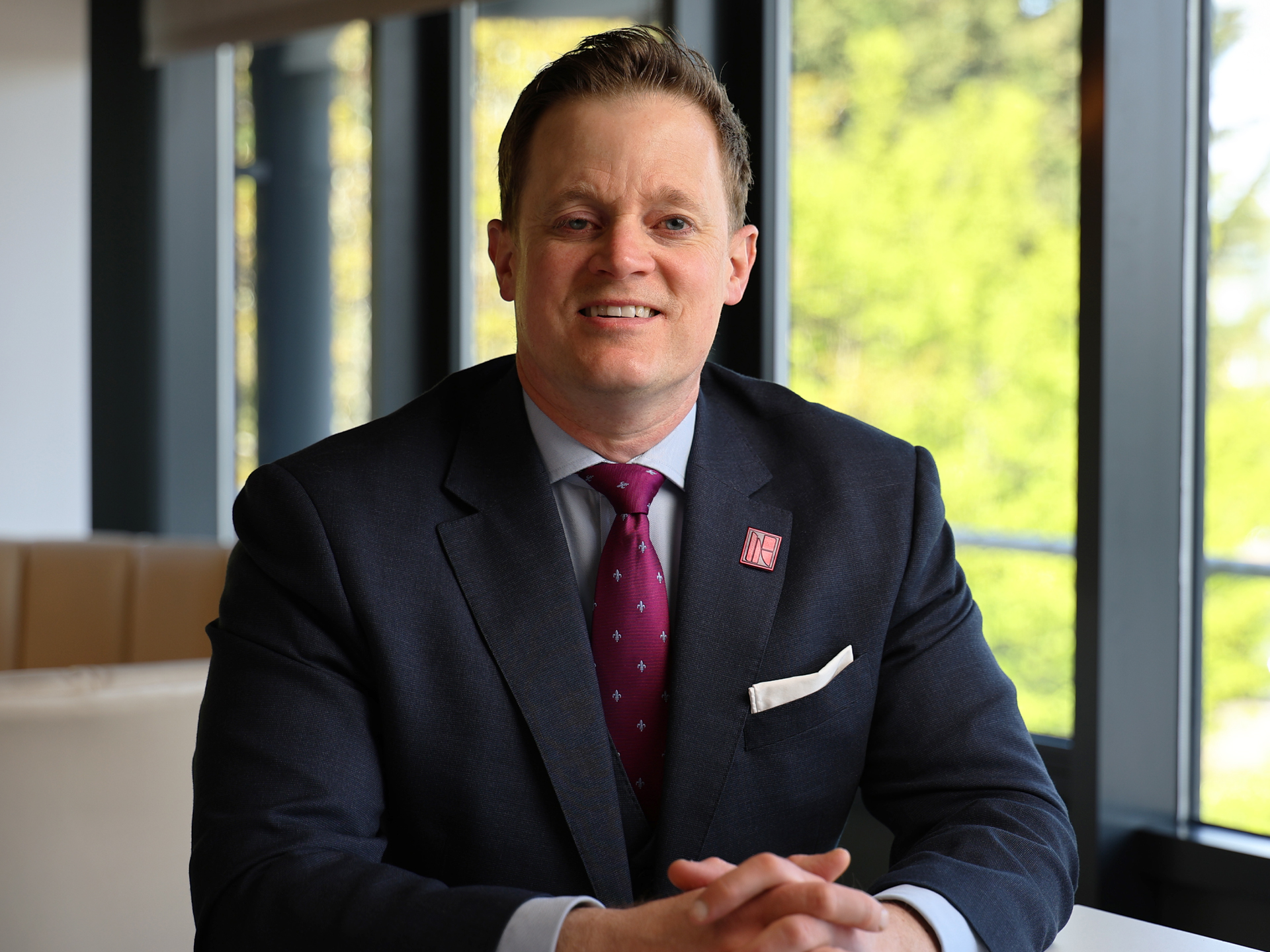
Council reorganisation is a rare chance to build resilient, accountable services, writes Norse Group Chief Executive Justin Galliford.
Surrey has often helped shape the way Britain is governed, and local government reorganisation gives it another opportunity to lead. From April next year, the county’s 12 councils will be replaced by two unitary authorities: East Surrey Council and West Surrey Council. That is a major administrative change, but it should not be treated as a purely structural exercise. Whitehall will be watching closely to see whether Surrey can do more than manage a complicated transition. The real test is whether it can create a stronger, more resilient model for delivering the services residents rely on every day.
The scale of the challenge should not be underestimated. Councils are responsible for hundreds of functions, spanning social care, highways, waste, public health, property, environmental services, emergency planning and more. Residents may follow the politics of reorganisation from a distance, but they will notice immediately if bins are missed, roads are not gritted, vulnerable people are not supported or responses to flooding, storms and wildfire risks are weakened. During reorganisation, service continuity is not a secondary concern. It is the foundation on which public confidence will rest.
Yet continuity alone is not enough. The danger in any large-scale reorganisation is that the urgent work of merging systems, teams, contracts and governance absorbs all the energy, leaving little space to ask more fundamental questions. If Surrey simply recreates existing delivery arrangements at a larger scale, it will have missed the point. Reorganisation should be a moment to confront long-standing pressures honestly: rising demand, constrained budgets, fragile supply chains, workforce shortages and the need for councils to demonstrate value for money without losing sight of public purpose.
That means avoiding false choices. For too long, debates about council services have too often been framed as a binary decision between outsourcing to the private sector or bringing everything back in-house. Neither route is automatically right. Poorly designed outsourcing can lock authorities into inflexible contracts, expose them to rising costs and move too much value away from the public purse. But bringing every service directly inside a council is not always realistic either, particularly after years in which local government has been asked to do more with fewer resources. Many authorities no longer have the spare operational capacity, commercial expertise or management depth to absorb complex services safely overnight.
A more credible answer is a partnership LATCo. Local authority trading companies offer a middle course that deserves serious attention as Surrey designs its new system. At their best, they keep accountability close to councils and residents while adding specialist capability, commercial discipline and the ability to deliver at scale. They are not a retreat from public service values; they are a way of protecting them in a more demanding environment. Crucially, they can also help ensure that more of the value created through public spending remains within the public sector, rather than simply becoming private profit.
Norse Group, which I lead, works with councils across England in precisely this space. Owned by Norfolk County Council, we are neither a conventional outsourcing business nor an internal council department. Our partnerships support services including highways, waste, facilities management, property and environmental operations. The model combines public accountability with the operational focus needed to deliver consistently, improve productivity and manage risk. It also allows councils to pursue wider social value through training, local employment, apprenticeships and investment in the communities they serve.
This matters because the next phase of public service reform cannot be judged only by whether lines on an organisational chart have changed. Residents will judge the new councils by results: whether services are reliable, whether problems are fixed quickly, whether money is spent wisely and whether decisions feel connected to local needs. Ministers, meanwhile, will be looking for evidence that local government can modernise without losing democratic accountability. Surrey has the opportunity to demonstrate both.
The question for East Surrey and West Surrey Councils, therefore, should not simply be who delivers each service. It should be which delivery model will best protect resilience, improve outcomes, strengthen accountability and keep public value in public hands. Some services may be best delivered directly. Others may require partnership, shared capacity or specialist operational support. The strongest approach will be one that starts with outcomes rather than ideology.
If Whitehall wants a blueprint for reform, Surrey can provide one. But it will only do so if reorganisation becomes more than an exercise in consolidation. The prize is a model of local government that is financially disciplined, operationally resilient and unmistakably rooted in public service. Surrey can show that commercial rigour and democratic accountability do not have to pull in opposite directions. Used well, they can reinforce each other — and help build councils capable of meeting the pressures ahead.